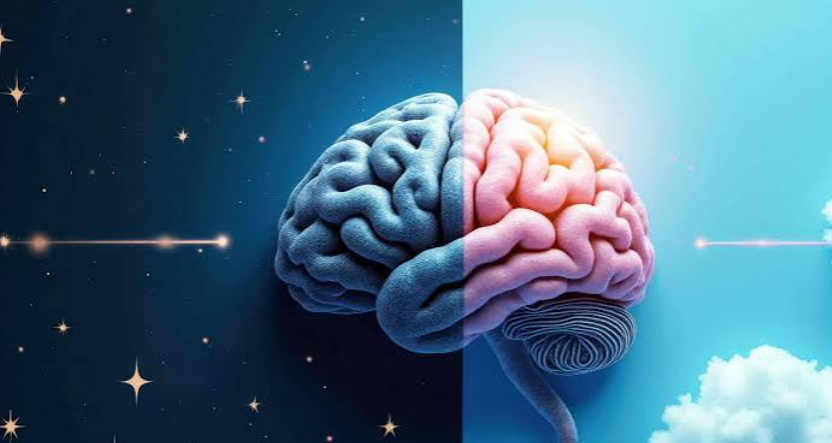
Every night, most people spend roughly two hours in a world that feels completely real, then wake up and struggle to hold onto it. Dreams have fascinated humans for thousands of years, showing up in ancient Egyptian texts, Greek philosophy, and the foundational writings of modern psychology. Yet for all that attention, they remain genuinely mysterious. Scientists still debate why the brain generates them at all. This article walks through what researchers currently know about dreaming, what happens in the brain during a dream, the main theories that try to explain their purpose, and what the content of dreams might reveal about waking life.
What Actually Happens in the Brain While You Dream
Dreams occur most vividly during REM sleep, which stands for rapid eye movement. During this stage, the brain becomes remarkably active. In fact, certain regions of the brain show activity levels that closely resemble the waking state, which is one reason dreams can feel so convincing while they are happening.
The prefrontal cortex, the area responsible for logic, self-awareness, and critical thinking, becomes significantly less active during REM. This helps explain why dream events that would seem absurd when you are awake feel completely normal inside the dream. Meanwhile, the amygdala, which processes emotion, stays highly engaged. That is why so many dreams carry a strong emotional charge, whether fear, joy, grief, or confusion, even when the storyline itself makes little logical sense.
The brain also temporarily paralyzes most voluntary muscles during REM sleep. This state, called REM atonia, is thought to prevent people from physically acting out their dreams. When this mechanism fails, a condition called REM sleep behavior disorder can develop, causing people to move, shout, or even get up while dreaming.
The Main Scientific Theories About Why We Dream
No single theory has won universal acceptance among researchers. Several competing frameworks each have real evidence behind them, and it is likely that dreaming serves more than one function simultaneously.
Memory Consolidation
One of the most well-supported ideas is that REM sleep, and dreaming within it, plays a key role in consolidating memories. Research from Harvard Medical School and others has shown that people who sleep after learning new material remember it significantly better than those who stay awake. Some scientists believe dreaming is the brain’s way of replaying and integrating new experiences with older memories, essentially filing the day’s information into long-term storage.
Emotional Regulation
Neuroscientist Matthew Walker, author of “Why We Sleep,” has proposed that REM dreaming acts as a kind of overnight therapy. The idea is that during REM sleep, emotional memories are replayed but in a neurochemical environment that strips away the sharp distress attached to them. This may be why people sometimes wake up feeling calmer about something that felt overwhelming the night before. When this process is disrupted, as it often is in post-traumatic stress disorder, nightmares and heightened emotional reactivity tend to follow.
Threat Simulation
Finnish neuroscientist Antti Revonsuo proposed the threat simulation theory, which suggests that dreaming evolved as a way for the brain to rehearse responses to dangerous situations. Nightmares and anxiety dreams, in this view, are not malfunctions. They are practice runs. By simulating threats during sleep, the brain may prepare the individual to handle similar situations more effectively when awake. It is an evolutionary argument, and while it remains debated, it does account for why threatening content appears so frequently in dreams across cultures.
Default Mode Network Activity
A more recent line of research connects dreaming to the brain’s default mode network, a set of regions that activate when a person is not focused on an external task, such as during daydreaming or mind-wandering. Some neuroscientists view dreaming as an extension of this spontaneous internal narrative-generating process, something the brain does naturally when it is not occupied with the demands of the outside world.
How Common Dream Themes Break Down Across Populations
Research has consistently found that certain dream themes appear across cultures and age groups with striking regularity. A large-scale study published in the journal Dreaming analyzed reports from thousands of participants and identified the most frequently reported categories of dream content.
| Dream Theme | Approximate Prevalence | Common Interpretation in Research |
| Being chased or attacked | Very high (reported by up to 80% of people) | Often linked to stress or avoided conflict |
| Falling | High | Associated with anxiety, loss of control |
| Flying | Moderate to high | Often tied to feelings of freedom or ambition |
| Teeth falling out | Moderate | Frequently connected to self-image concerns |
| Being unprepared for a test or event | Moderate | Common during periods of real-life pressure |
| Deceased loved ones | Moderate | Often appears during grief or significant life transitions |
It is worth noting that what these themes mean for any individual can differ substantially from general patterns. Shared dream themes suggest common emotional or psychological pressures that humans face broadly, but personal context always matters.
Do Dreams Actually Reflect Your Inner Life
This is where science and psychology intersect in genuinely interesting ways. Some researchers are skeptical that dreams carry meaningful psychological content, arguing they are largely random neural noise that the waking brain retrospectively tries to organize into a narrative. Others, drawing on decades of clinical observation, maintain that dream content does reflect emotional preoccupations, unresolved conflicts, and current psychological states.
The continuity hypothesis, developed by dream researcher G. William Domhoff, offers a middle path. It holds that dream content tends to mirror waking life concerns. People who frequently think about certain relationships, fears, or goals tend to dream about them. In this view, dreams are not coded messages from the unconscious so much as a continuation of ordinary waking thought patterns, processed through a brain operating under different neurochemical conditions.
If you have ever found yourself wanting to understand the meaning of your dream, current research suggests that looking at the emotional tone and recurring themes, rather than searching for hidden symbols, is a more grounded approach. What feelings dominated the dream? What situations in your waking life carry a similar emotional weight? Those questions tend to be more productive than strict symbol-by-symbol interpretation.
Factors That Shape Dream Content
Dreams do not happen in a vacuum. Several well-documented factors influence what people dream about, how vivid those dreams are, and how often dreams are remembered.
- Stress and anxiety: Higher stress levels are reliably associated with more frequent and more negative dream content, including nightmares.
- Medications: Certain drugs, including some antidepressants, beta-blockers, and blood pressure medications, are known to alter dreaming. Some suppress REM sleep; others intensify it.
- Alcohol: Alcohol reduces REM sleep in the early part of the night. When it wears off, REM rebounds, often producing vivid and sometimes disturbing dreams in the second half of the night.
- Sleep deprivation: Going without adequate sleep creates a REM rebound effect when a person finally sleeps, leading to longer and more intense periods of dreaming.
- Pregnancy: Hormonal changes and disrupted sleep commonly make dreams more vivid and emotionally intense during pregnancy.
- Recent experiences: The “day residue” effect is well established. Events, conversations, and media from the previous day frequently appear in that night’s dreams.
Lucid Dreaming: When the Dreamer Becomes Aware
A lucid dream is one in which the dreamer becomes aware they are dreaming, sometimes to the point of being able to influence the dream’s content. Scientific confirmation of lucid dreaming came in 1975, when British psychologist Keith Hearne used pre-agreed eye movement signals to communicate with a participant who was demonstrably in REM sleep. The research was later replicated and expanded by Stephen LaBerge at Stanford University.
Lucid dreaming has attracted interest both as a research tool and as a potential therapeutic technique. Some studies have explored its use in reducing the frequency and intensity of recurring nightmares, particularly in people with post-traumatic stress disorder. The evidence is still preliminary, but it represents one of the more practical applications of dream research to date.
Techniques that have shown some success in inducing lucid dreams include reality testing throughout the day, the mnemonic induction of lucid dreams method (MILD) developed by LaBerge, and waking up after about five to six hours of sleep before returning to sleep with focused intention. None of these methods work reliably for everyone, and natural lucid dreamers tend to experience them far more often than those who have never had one spontaneously.
See also: How Your Inner Voice Shapes Your Mental Health
Putting Dream Science in Perspective
Dreaming is one of the most universal human experiences, and yet it remains one of the least fully understood. The science is real, the theories are compelling, and the clinical observations are worth taking seriously. What remains clear is that sleep quality matters enormously for mental and physical health, and REM sleep specifically seems to do important work, whether that work is memory processing, emotional regulation, or something researchers have not yet fully described. Paying attention to your dreams, not as mystical prophecy but as a potential window into your current emotional state, is a practice with genuine psychological support behind it.


 By
By