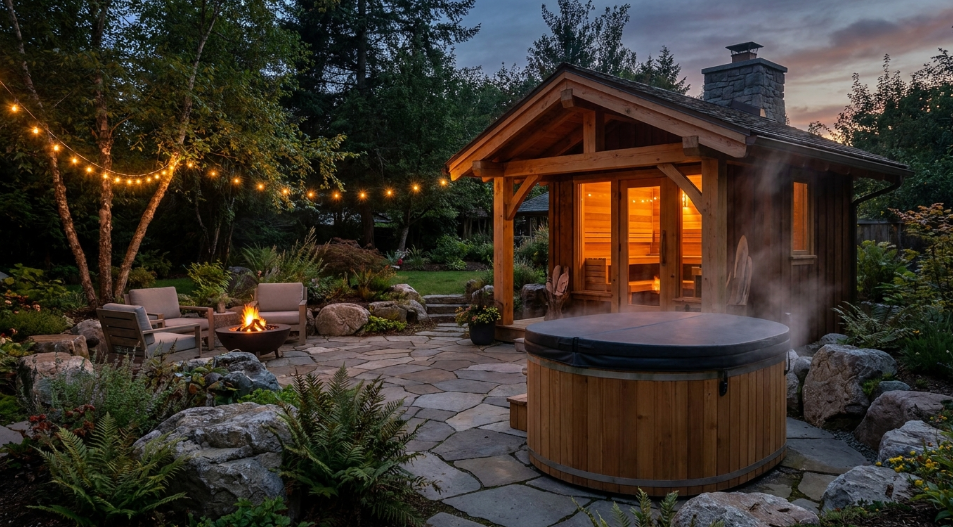
An infrared sauna needs a flat, stable, well-drained surface, and the three most common choices are a concrete pad, an existing or new deck, and a compacted gravel base with pavers. Concrete is the most durable and priciest option, gravel with pavers is the budget-friendly middle ground, and a deck works well if it is already built to standard residential load ratings and has room to spare.
Why the Base Actually Matters
An infrared cabin sitting on an uneven or shifting surface develops problems that are hard to see coming: door seals stop lining up, panels can flex slightly out of position, and moisture wicking up from bare ground or soil eventually reaches wood components even in models built for outdoor use. None of this happens overnight, which is exactly why people skip the base and regret it a year or two later rather than immediately.
Drainage matters as much as flatness. Water pooling under or around the cabin base, especially in freeze-thaw climates, can heave a surface out of level over a single winter, which is one of the more common reasons an otherwise well-installed sauna ends up needing releveling.
Concrete Pad: The Premium, Permanent Option
A poured concrete pad is the most durable base available and the standard choice for anyone planning to keep the sauna in one spot indefinitely. Costs vary by region and pad size, but a pad sized for a typical two- to four-person cabin generally runs somewhere in the low thousands of dollars once labor, forming, and the concrete itself are included, more if a contractor also needs to grade the site first.
The tradeoff is permanence. A concrete pad is not something you relocate if plans change, so it makes the most sense for a sauna placement that is genuinely final, such as a purpose-built spot in a backyard corner or alongside an existing patio.
Gravel and Pavers: The Budget-Friendly Middle Ground
A compacted gravel base topped with concrete or rubber pavers costs a fraction of a poured pad, often just a few hundred dollars in materials for a typical DIY weekend project. The gravel provides drainage, the pavers provide a flat, walkable surface, and the whole setup can be adjusted or expanded later if the sauna needs to move or a second unit gets added.
The main downside is more manual labor upfront to properly compact the base, since a gravel pad that is not tamped down well will settle unevenly within the first year, undoing the whole point of building it. Renting a plate compactor for an afternoon is a common and inexpensive way to avoid that problem.
Building on an Existing Deck
Placing an infrared cabin on an existing deck is often the simplest option if the deck is already there, level, and rated for standard residential loads. Most compact infrared cabins weigh 300 to 500 pounds empty, which a properly built deck handles easily alongside the added weight of the people using it. Older decks, especially ones built decades ago to lighter code standards, are worth having a contractor look at before adding a sauna, particularly for larger cabins.
Composite and pressure-treated wood decking both work fine underneath a sauna, though a rubber mat or set of interlocking tiles placed directly under the cabin’s footprint helps protect the decking from moisture and heat cycling over years of use.
Comparing the Real Costs
Lined up together, gravel and pavers sit at the low end, an existing deck costs nothing extra if it already meets load requirements, and a new poured concrete pad or new deck construction sits at the high end. Shoppers comparing cabin sizes across SweatDecks’ lineup and other specialty retailers should factor base cost into the total project budget from the start, since a larger, heavier cabin can push a marginal deck or thin gravel base past what it can reasonably support.
Getting a rough site quote before ordering a sauna, rather than after, avoids the situation where the cabin arrives before the base is ready for it.
Indoor Placement Skips Most of This
Saunas installed inside a garage, basement, or spare room generally sit on the existing floor with little or no additional base work, as long as the floor is level and can handle the cabin’s weight, which is rarely an issue for a finished interior floor. A moisture-resistant mat underneath is still a reasonable precaution, particularly in a basement where humidity is already a factor.
Indoor placement is one of the more common reasons infrared cabins have grown in popularity, since it sidesteps the outdoor base question entirely for anyone with the interior space to spare.
Frequently Asked Questions
Can an infrared sauna sit directly on grass or dirt?
Not for long-term placement. Grass and bare dirt hold moisture, shift with weather, and make it hard to keep the cabin level, which stresses the frame over time. A stable, well-drained surface underneath is worth the modest cost even for a cabin that will only stay in one spot for a season or two.
What is the cheapest acceptable base for an outdoor infrared sauna?
A compacted gravel pad with paver stones on top is usually the least expensive option that still provides proper drainage and a level surface, often costing a few hundred dollars in materials for a weekend DIY project. It is a reasonable middle ground between bare ground and a full concrete pour.
Does an infrared sauna need a permit to sit on a deck?
The sauna itself usually does not require a separate permit if it is simply placed on an existing, code-compliant deck, but any new deck construction or electrical work to power the cabin typically does. Local rules vary, so checking with the local building department before construction begins is the safer approach.
How much weight does a deck need to support for an infrared sauna?
Most one- to two-person infrared cabins weigh 300 to 500 pounds empty, plus the weight of however many people are inside during use. A deck built to standard residential load ratings generally handles this without modification, but older or smaller decks are worth having a contractor confirm before placing a sauna on them.
References
- Cardiovascular and Other Health Benefits of Sauna Bathing: A Review of the Evidence, Mayo Clinic Proceedings (2018)
- Effects of heat and cold on health, with special reference to Finnish sauna bathing, American Journal of Physiology – Regulatory, Integrative and Comparative Physiology (2018)
- Benefits and risks of sauna bathing, The American Journal of Medicine (2001)


 By
By